

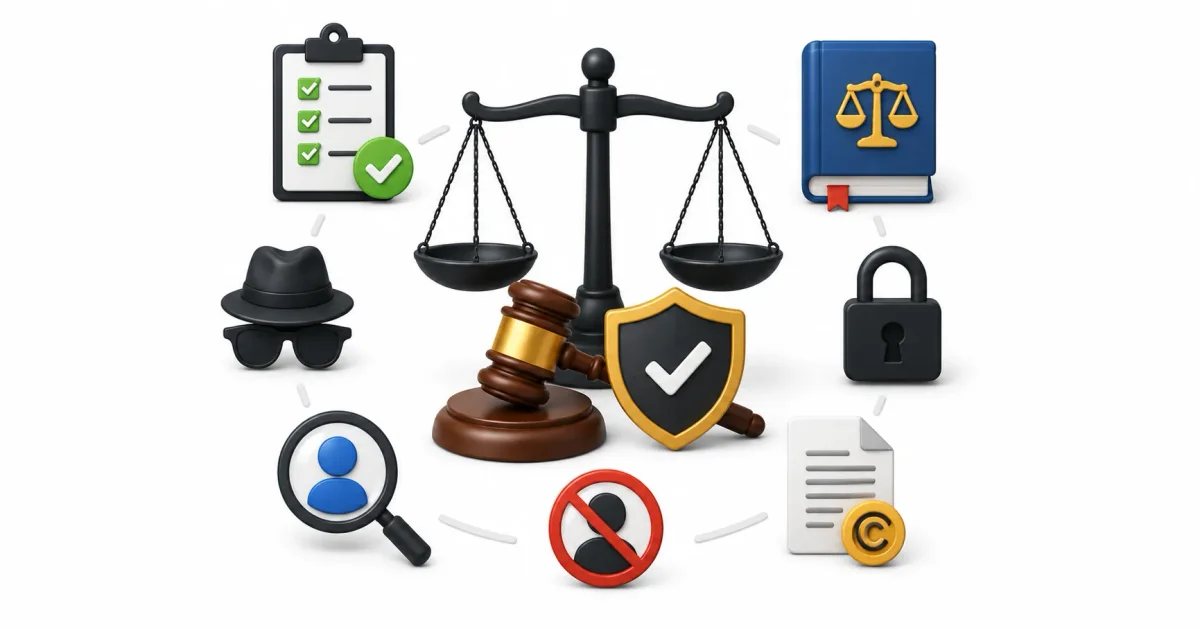
A pervasive myth exists within the amateur cybersecurity and internet sleuth communities: “If a piece of information exists on the public internet, it is inherently public. If it is public, it is legal for me to collect it, store it on my hard drive, and use it however I see fit.”
This statement is legally false.
As the volume of open-source data has exploded over the last decade—fueled by social media oversharing and corporate data breaches—global legal frameworks have evolved rapidly to protect personal privacy and corporate infrastructure. For professional intelligence analysts, corporate threat hunters, and freelance private investigators, successfully navigating the line between resourceful internet research and computer crime is a daily challenge.
In the eyes of federal law enforcement and civil litigators, ignorance of the law is not a defense. Crossing the legal boundary—even accidentally during an investigation—can result in civil lawsuits, the destruction of a corporate security firm’s reputation, or federal criminal prosecution.
In this guide, we will dissect the legal boundaries and foundational ethical frameworks that govern the professional practice of Open Source Intelligence (OSINT).
1. The Federal Legal Framework: The CFAA and Unauthorized Access
The most critical legal boundary in any digital investigation is the concept of Authorization.
In the United States, the primary legislation governing this boundary is the Computer Fraud and Abuse Act (CFAA). Originally enacted in the 1980s but updated since, the CFAA makes it a federal crime to “intentionally access a computer without authorization or in excess of authorized access.” Similar laws exist globally, such as the United Kingdom’s Computer Misuse Act of 1990.
The “Publicly Accessible” Rule
The golden rule of OSINT is this: You may only collect data that a system freely presents to the general public without an authentication barrier.
If a corporation leaves an Amazon Web Services (AWS) S3 storage bucket misconfigured and open to the internet without a password requirement, viewing the file index of that bucket via your browser is generally considered legal (though downloading the data enters a grey area of ethics). The data was, by definition, “open.”
Crossing the Line: Exploitation and Bypassing
The moment you attempt to bypass a digital security control, you are no longer doing Open Source Intelligence. You are engaging in unauthorized hacking.
- The Paywall Bypass: If an intelligence forum requires a paid subscription to view its content, and you use a SQL Injection vulnerability or a modified HTTP header to trick the web server into showing you the restricted content for free, you have exceeded your authorized access. This is a cybercrime.
- The Password Breach Trap: This is a common pitfall for beginner OSINT analysts. You are investigating a target, and you discover their email address and plaintext password in a public database leak (like the 2013 Yahoo breach or the RockYou leak). You then take that password and try to log into the target’s Facebook or Gmail account to look for more clues.
- This is a federal felony. Using a leaked credential to bypass an authentication gateway without the explicit permission of the account owner is illegal computer trespass, regardless of how easily accessible the password was.
Active Reconnaissance vs. Passive OSINT
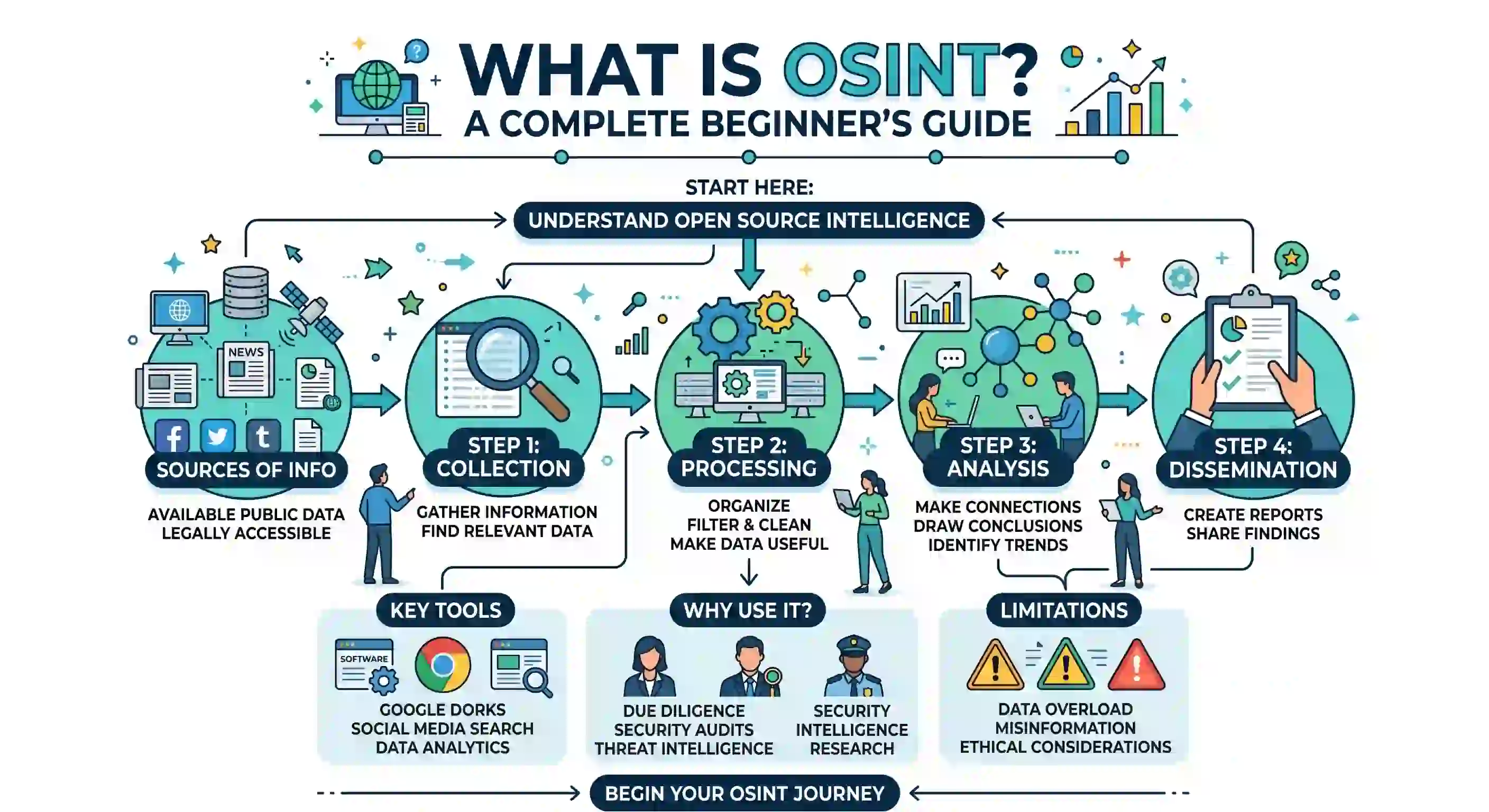
As discussed in our guide on How OSINT Actually Works, active reconnaissance involves interacting directly with a target’s infrastructure.
Running a tool like Nmap or Masscan to port-scan a corporation’s external IP addresses without their permission is debated in legal circles. While port scanning is not inherently illegal in all jurisdictions, it is considered provocative. It triggers Intrusion Detection Systems (IDS), consumes network bandwidth, and can be interpreted by a prosecutor as the preparatory phase of a cyberattack. Professional OSINT analysts avoid active scanning to remain within legal boundaries.
2. Global Privacy Regulations: GDPR and CCPA
Even if you access intelligence data legally via public platforms, you do not have the right to store it indefinitely.
Governments have enacted privacy legislation to protect their citizens’ Personally Identifiable Information (PII). Two prominent examples are the European Union’s General Data Protection Regulation (GDPR) and the California Consumer Privacy Act (CCPA).
The Principle of “Lawful Basis”
Under the rules of GDPR, if you are a corporate investigator compiling an intelligence dossier on a European citizen, you cannot hoard their data indefinitely. You must have a “Lawful Basis” for processing that data. In corporate OSINT (such as investigating an insider threat or preventing financial fraud), this lawful basis is usually categorized as Legitimate Interest. However, if audited, the company must be able to prove that tracking this individual was necessary to protect the company’s assets.
The “Right to be Forgotten” (The Right to Erasure)
GDPR grants EU citizens the “Right to Erasure.” If an OSINT analyst creates a database of scraped social media profiles, a European citizen can demand that the analyst delete all digital records pertaining to them. If the analyst refuses or fails to comply within a 30-day timeframe, their organization can face fines of up to €20 million or 4% of their global annual revenue.
Secure Storage Mandates
If you are authorized to collect PII (names, phone numbers, home addresses, family relationships), privacy laws mandate that you store this intelligence securely. If an OSINT investigator stores an unencrypted target dossier on a USB drive and loses it on a commuter train, they have committed a GDPR violation. All collected intelligence must be stored on secured, encrypted (AES-256), and preferably air-gapped data volumes, as discussed in our guide on Advanced Encryption Tools.
3. Terms of Service (ToS) and Automated Scraping
The modern internet relies on automation. However, social media platforms (like Meta, X, and LinkedIn) protect their data monopolies.
If you read the Terms of Service (ToS) for platforms like LinkedIn or Facebook, you will find clauses forbidding the use of automated scrapers, Python bots, or scripts to extract user data.
The Civil Legal Battle
Violating a website’s Terms of Service is generally not a criminal offense, but it is a civil violation. These platforms dedicate resources to detecting scraping bots. If they catch your bot, they can ban your account and block your IP subnet. If a corporate intelligence firm scrapes a platform for commercial profit, the platform’s lawyers may issue a Cease and Desist order, followed by a civil lawsuit for breach of contract and server strain.
The Scraping Dilemma
For OSINT analysts, this presents a daily hurdle. Manually clicking through 5,000 Facebook profiles to find a target is impractical. Analysts must weigh the operational necessity of using automated OSINT tools against the risk of civil litigation and the loss of their cultivated sock puppet accounts.
4. The Ethical Spectrum: OSINT vs. Malicious Doxxing
Legality is defined by what the government says you are allowed to do. Ethics are defined by what you should do. In the OSINT community, a critical ethical boundary separates legitimate intelligence gathering from internet harassment.
What is Doxxing?
Doxxing (derived from the hacker term “dropping dox/documents”) is the unauthorized public release of a target’s personally identifiable information. This usually involves finding a target’s real name, home address, phone number, employer, and the names of their family members, and broadcasting this information on public forums (like Reddit, 4chan, or Twitter).
The intent of Doxxing is to encourage others to harass, intimidate, fire, or harm the target (such as executing a “Swatting” attack by calling a SWAT team to their house).
Doxxing is unethical, universally condemned by professional security organizations, and is frequently illegal under cyber-stalking and harassment statutes.
The Intent Divider
The software tools used for OSINT and Doxxing are identical. The difference is based on Intent and Dissemination.
- The Professional OSINT Analyst uses link analysis to discover that an anonymous cyberbully lives at a specific address in Chicago. The analyst packages this evidence into a private intelligence report and hands it to the police department or the client. The sensitive data never sees the public internet. This is ethical intelligence work.
- The Malicious Doxxer finds the same address using the same tools. They post the unredacted address on Twitter with a caption encouraging people to harass the target. This is criminal harassment.
The Principle of Minimizing Collateral Damage
Ethical OSINT requires the minimization of collateral damage. When investigating a threat actor, you will inevitably uncover the digital footprints of their family members and spouses. An ethical analyst ignores the innocent parties. They do not document their names, they do not save their photos, and they redact innocent bystanders from the final intelligence report.
5. Establishing a Corporate Code of Ethics
Professional intelligence analysts operate under strict internal guidelines to ensure they never cross the line from investigator to criminal. If you are building an OSINT toolkit or managing a threat intelligence team, you must establish a clear Code of Ethics.
1. Rules of Engagement (RoE)
Before beginning an investigation, the Rules of Engagement must be written, vetted by legal counsel, and signed by the client. The RoE dictates what IP addresses the analyst is allowed to look at, what social media platforms they can use, and forbids active exploitation, password bypassing, or physical surveillance.
2. The Verification Mandate
As discussed in our guide on The Most Common OSINT Mistakes, publishing intelligence that you have not verified is an ethical failure. Falsely accusing an innocent person of a crime because you rushed your analysis can destroy their life and open your organization up to defamation lawsuits. Analysts must employ the “Rule of Two,” requiring at least two independent sources to confirm any critical finding.
3. Purpose Limitation (Scope Creep)
Data must only be collected for the stated purpose of the investigation. If you are hired to investigate an employee for corporate espionage, and during your search you discover the employee is having an extramarital affair, that information is outside the scope of the investigation. An ethical analyst ignores it, deletes it from their notes, and never includes it in the final report, as it has no bearing on the corporate espionage charge.
Frequently Asked Questions (FAQ)
Is OSINT legal?
Yes, OSINT is legal when it involves collecting and analyzing publicly available information. It becomes illegal when investigators bypass authentication, access private systems, or use gathered data to stalk, harass, or defame individuals.
What laws govern OSINT investigations?
Key laws include the Computer Fraud and Abuse Act (CFAA) in the US, the General Data Protection Regulation (GDPR) in Europe, and various national data protection and privacy laws. The specific legal framework depends on the jurisdiction where the investigation takes place.
Can I scrape social media profiles for OSINT?
You can view and collect publicly available social media information. However, automated mass scraping may violate the platform’s Terms of Service and, in some jurisdictions, privacy laws like GDPR. Always check local regulations before large-scale data collection.
What is the ethical boundary between OSINT and surveillance?
The ethical boundary is crossed when an investigator moves from passively observing publicly available information to actively monitoring, tracking, or profiling an individual in a way that invades their reasonable expectation of privacy.
Do I need written authorization before conducting an OSINT investigation?
For professional and corporate investigations, yes. A clearly defined Rules of Engagement document, reviewed by legal counsel and signed by the client, should specify exactly what sources, platforms, and methods are authorized before any investigation begins.
Conclusion: With Great Power Comes Great Responsibility
The power to uncover hidden truths on the modern internet is immense. With that power comes a profound legal and ethical responsibility.
Open Source Intelligence is not a free license to hack, stalk, or harass individuals. It is a disciplined profession governed by strict federal laws and ethical codes. By maintaining your operational security, respecting the line of authorized access, prioritizing data minimization, and protecting the innocent, you can conduct effective investigations without compromising your professional integrity or risking your freedom.
Discussion
Loading comments...