
Security Tools
Password Generator
Generate strong, secure, random passwords with custom length and character options.
Generate RFC 4122 and RFC 9562 compliant UUIDs (v4, v7, v1) in bulk for development, databases, and testing.
The FreeTechLearner UUID Generator creates cryptographically secure Universally Unique Identifiers (UUIDs) conforming to RFC 4122 and RFC 9562 standards. It allows developers to generate random (v4), time-ordered (v7), and time-based (v1) IDs in bulk with custom casing, hyphens, and wrapper formats.
A UUID (Universally Unique Identifier) is a 128-bit number used to uniquely identify information in computer systems without significant central coordination. It is represented as 32 hexadecimal digits displayed in five groups separated by hyphens (8-4-4-4-12 format).
Version 4 is completely random (except for version and variant bits). Version 7 is a modern standard (RFC 9562) that combines a 48-bit millisecond timestamp with random data, making it database-friendly and sortable. Version 1 is based on the current timestamp, clock sequence, and node ID (MAC address fallback).
Yes. All generation is done entirely on your computer using the cryptographically secure window.crypto API in your web browser. None of the generated UUIDs are sent to our servers or processed externally.
Yes. You can generate up to 1,000 UUIDs at a time. You can customize casing, remove hyphens, or format the output as a JSON array, Python list, or SQL insert statement, and easily copy or download the results.
For UUID v4 (random), the probability of generating a duplicate is practically zero. You would need to generate 1 billion UUIDs per second for about 85 years to reach just a 50% chance of a single collision.
UUIDs are excellent for distributed databases and hiding data volume from users. However, random UUIDs (like v4) can fragment database indexes. We recommend using the new UUID v7 for primary keys, as they are time-ordered and optimize index performance.
Hyphens are standard in the RFC specification (making them 36 characters long), but many databases and systems store them as 32-character hexadecimal strings to save space. Our tool allows you to easily toggle hyphens on or off.
No, standard UUIDs are case-insensitive. However, they are traditionally output in lowercase. Our tool provides a toggle if your specific system requires UPPERCASE formatting.
They look exactly the same structurally (8-4-4-4-12 hex groups). The difference is that the first 12 characters (48 bits) of a v7 UUID represent a Unix timestamp, meaning they naturally sort chronologically.
Yes, GUID (Globally Unique Identifier) is simply Microsoft's implementation and term for the UUID standard. Our generated UUIDs can be used anywhere a GUID is required.
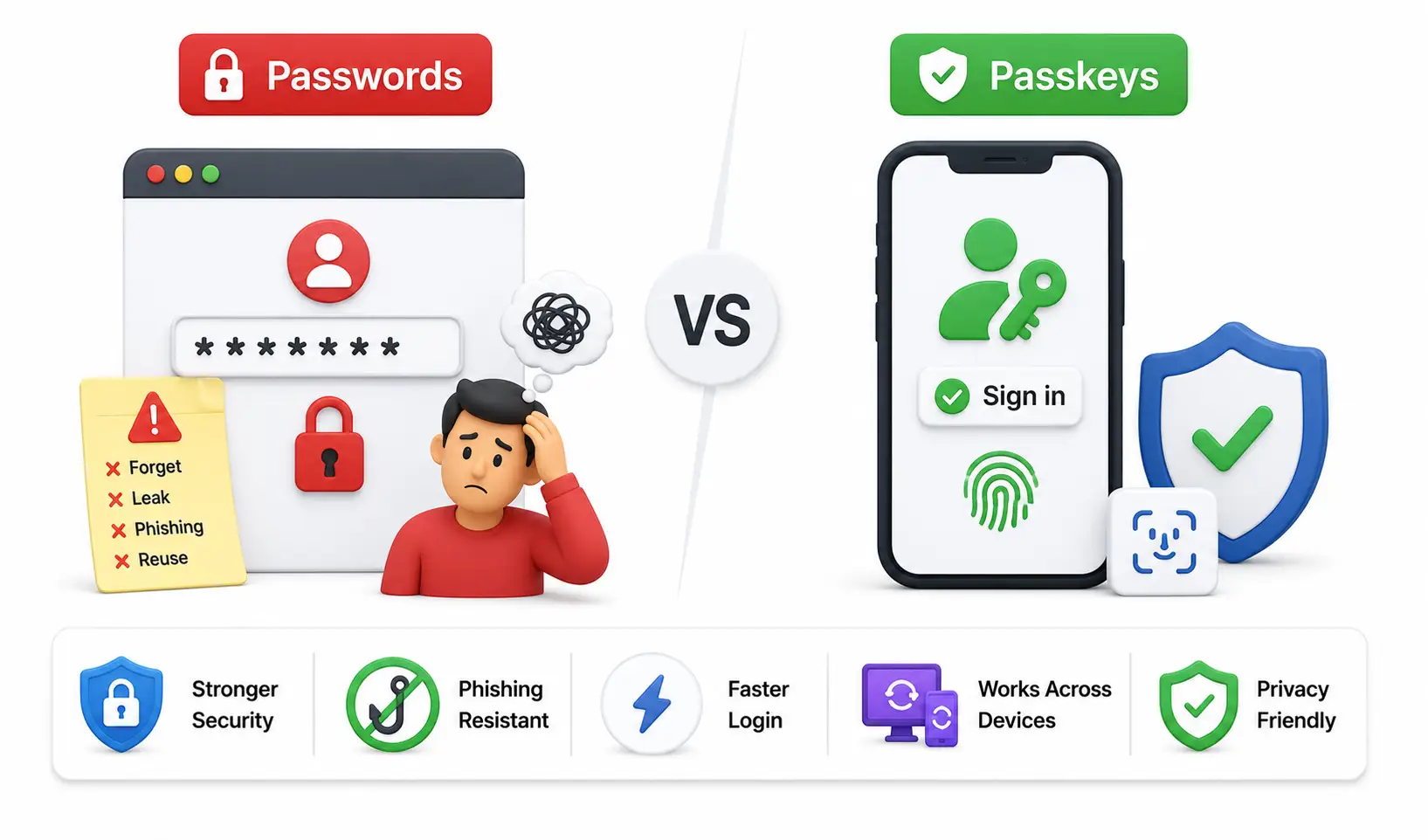
Master the definitive future of global online security. A massive guide explaining FIDO2 Passkeys, Public-Key Cryptography, and why passwords are dead.

A complete hands-on tutorial to self-hosting Vaultwarden using Docker Compose, Caddy, Nginx, PostgreSQL, automated hot backups, and Fail2ban security.

Master Linux package management. A DevOps guide to installing software using APT, DNF, Pacman, Snap, Flatpak, AppImages, and compiling from source code.
Explore our full collection of free, privacy-first developer and SEO tools.
Browse All 134+ ToolsStart typing to search across articles, tools & courses