

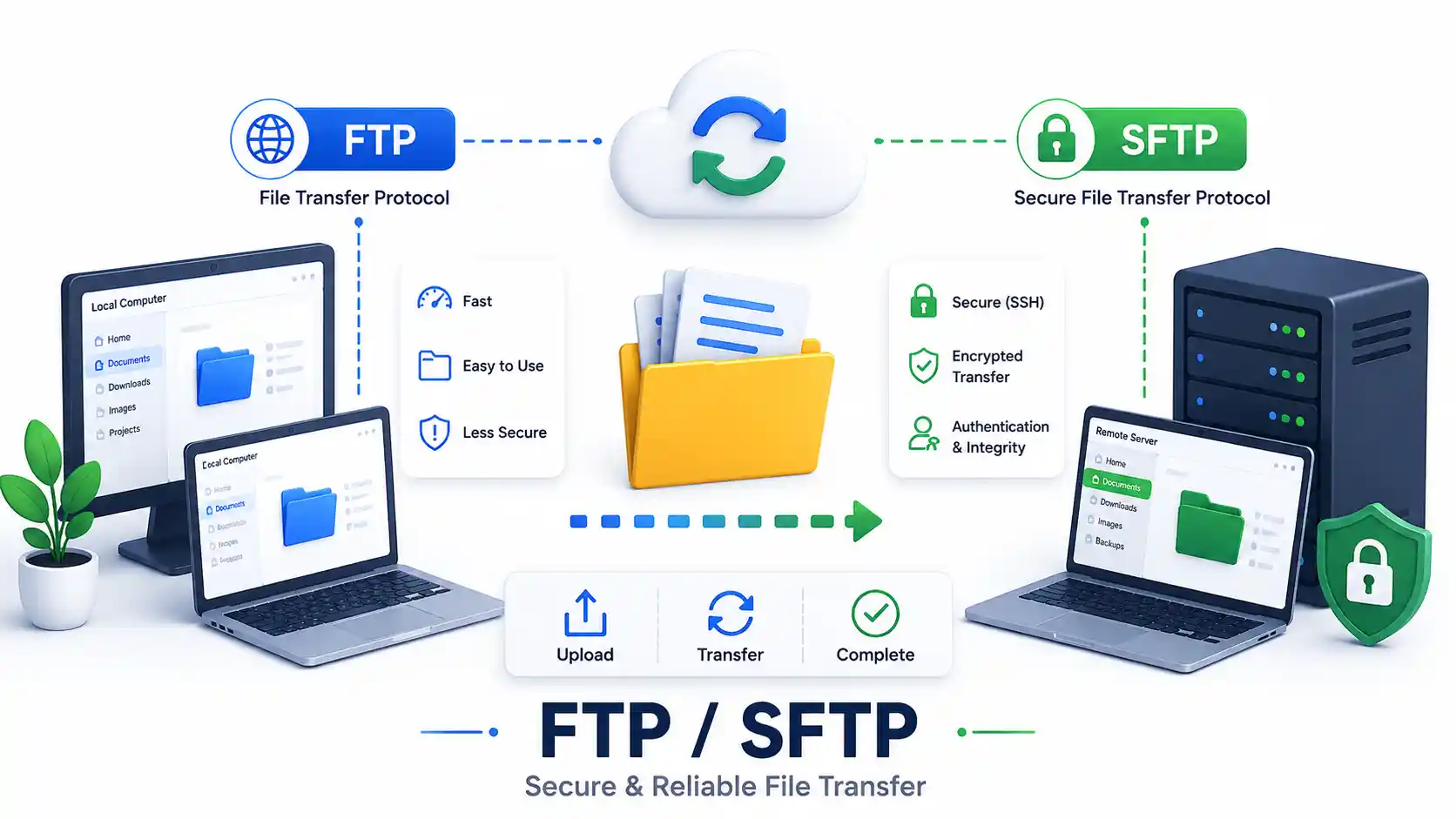
Whether you are managing a Virtual Private Server (VPS), uploading files to your web host, or sharing large datasets across a corporate network, you need a reliable way to move data from your local machine to a remote server.
For decades, the standard answer was FTP (File Transfer Protocol). However, as cyber threats evolved, the tech industry heavily shifted toward its secure counterpart: SFTP (SSH File Transfer Protocol).
In this guide, we will dive deep into the mechanics of FTP and SFTP, highlight the best client software for Windows, macOS, and Linux, and provide step-by-step tutorials on how to install and use them to safely move your data.
1. What is FTP (File Transfer Protocol)?
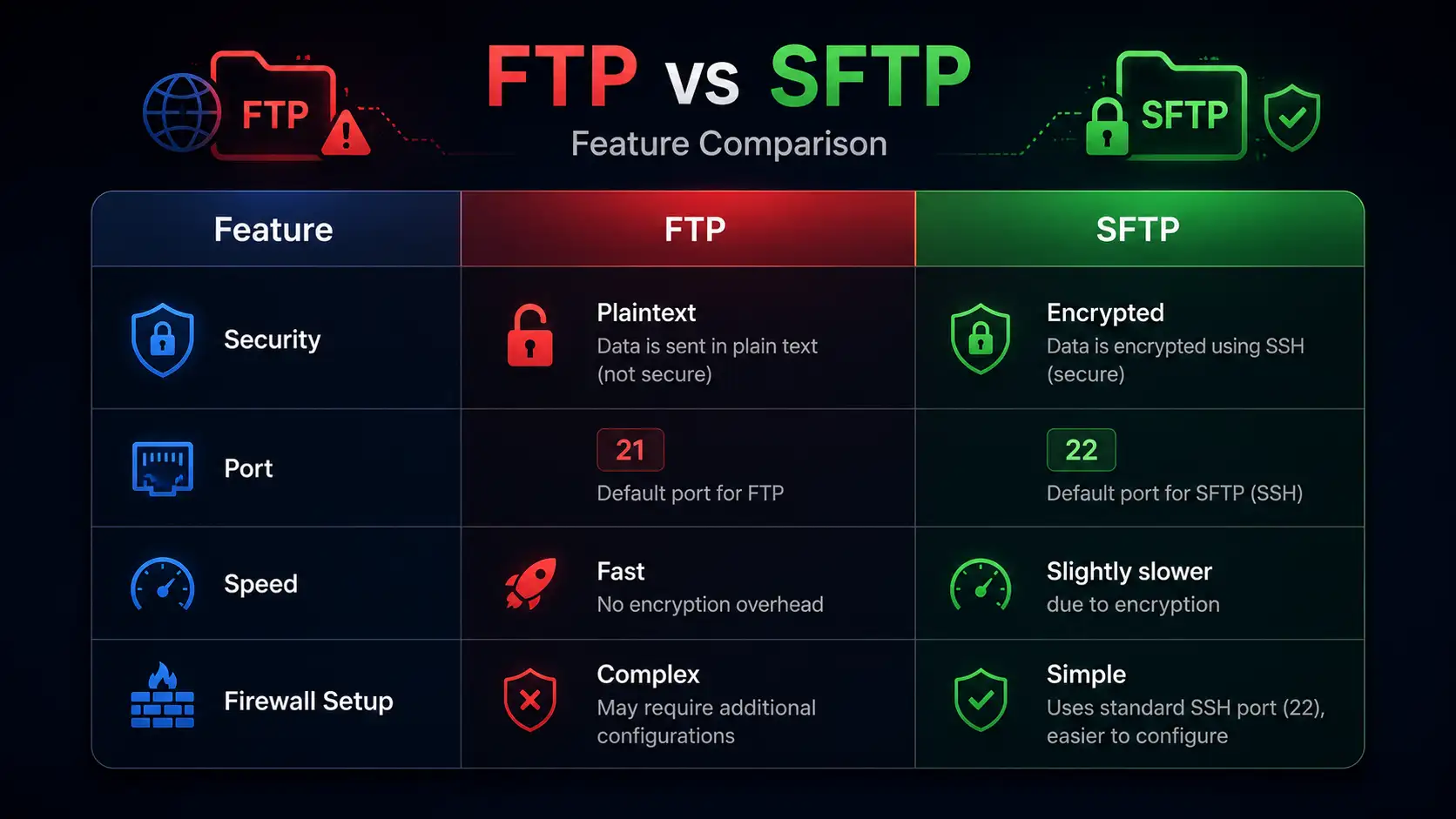
FTP is one of the oldest protocols used on the internet, dating back to the 1970s. It operates on a client-server architecture, typically using Port 21.
When you use an FTP client, you connect to an FTP server, authenticate with a username and password, and can then upload, download, or manage files.
The Problem with FTP: Security
The fatal flaw of standard FTP is that it transfers all data—including your username and password—in clear, unencrypted text. If someone intercepts your network traffic (e.g., via a man-in-the-middle attack on a public Wi-Fi network), they can easily steal your credentials and hijack your server. Because of this, standard FTP is largely considered obsolete and dangerous for sensitive data.
2. What is SFTP (Secure File Transfer Protocol)?
While it shares the “FTP” acronym, SFTP is an entirely different beast. SFTP is a subsystem of SSH (Secure Shell) and typically runs over Port 22.
Because it operates over SSH, everything is encrypted. Your authentication credentials, the file transfers, and the directory listings are all protected within a secure cryptographic tunnel.
Why SFTP is the Industry Standard
- Encrypted Packets: Even if your data is intercepted, it is completely unreadable.
- Single Port Operation: SFTP uses a single port (usually 22) for both commands and data, making it much easier to configure with firewalls.
- File Permissions: SFTP seamlessly interacts with Linux file ownership and permission structures.
3. Best FTP/SFTP Software Across Platforms
To transfer files, you need “Client” software on your local computer. Here are the top tools used by system administrators and developers worldwide.
For Windows Users
- WinSCP: Arguably the most popular Windows SFTP client. It features a dual-pane interface (local files on the left, server files on the right), a built-in text editor, and deep Windows integration.
- FileZilla: A powerful open-source, cross-platform client that supports FTP, FTPS, and SFTP. It’s excellent for handling thousands of files simultaneously.
For macOS Users
- Cyberduck: A beautifully designed, open-source client for Mac. It supports SFTP, WebDAV, Amazon S3, and more. It integrates perfectly with macOS Finder.
- Transmit: A premium, highly polished file transfer app for Mac. It is known for its blazing-fast speed and gorgeous UI (paid software).
For Linux Users
- FileZilla (Linux Edition): Just like on Windows, FileZilla provides a robust GUI for managing transfers on Linux desktop environments.
- Command Line (CLI): Linux inherently supports SFTP through the terminal. No extra software needed!
4. Tutorial: How to Install and Use FileZilla
Because FileZilla is completely free and cross-platform, it is the perfect tool for our tutorial.
Step 1: Installation
- Windows / Mac: Go to the official FileZilla download page and download the installer. Run the executable and follow the setup wizard.
- Linux (Ubuntu/Debian): If you are unsure how to install software on Linux, simply open your terminal and run:
sudo apt update
sudo apt install filezilla
Step 2: Connecting to Your Server via SFTP
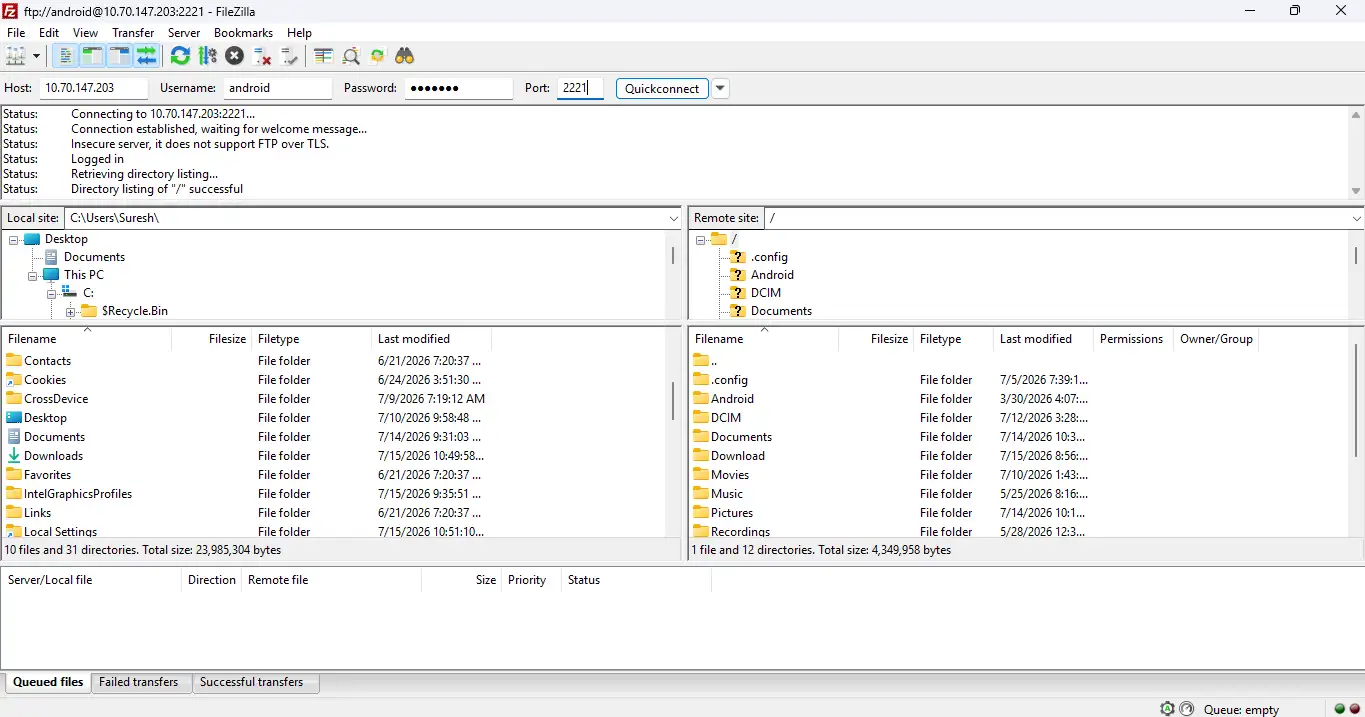
Launch FileZilla. At the top of the screen, you will see a “Quickconnect” bar. Enter the following details:
- Host: Type
sftp://followed by your server’s IP address (e.g.,sftp://192.168.1.100orsftp://yourdomain.com). Addingsftp://forces the secure protocol. - Username: Your server username (e.g.,
rootoradmin). - Password: Your server password.
- Port:
22(the default SSH/SFTP port).
Click Quickconnect. You will likely see a prompt asking to trust the host key. Check “Always trust this host” and click OK.
Step 3: Transferring Files
The FileZilla interface is divided into two main sections:
- Left Side (Local site): Files on your actual computer.
- Right Side (Remote site): Files on your server.
To upload a file, simply drag it from the left side and drop it onto the right side. To download, do the reverse. You can watch the transfer progress in the queue pane at the bottom of the window.
5. Tutorial: Command-Line SFTP (Linux & macOS)
If you prefer the terminal, you don’t need a GUI. As long as you have SSH installed, you can use the built-in sftp command.
- Open your terminal.
- Initiate the connection using the format
sftp username@server_ip:sftp root@192.168.1.50 - Enter your password when prompted.
- You are now in the interactive SFTP prompt (
sftp>). Here are the most essential commands:ls- List files on the remote server.lls- List files on your local machine.cd [folder]- Change directory on the remote server.lcd [folder]- Change directory on your local machine.put [filename]- Upload a file to the server.get [filename]- Download a file from the server.exit- Close the connection.
Example of uploading a website backup:
sftp> lcd /home/user/backups
sftp> cd /var/www/html
sftp> put latest_backup.zip
Uploading latest_backup.zip to /var/www/html/latest_backup.zip
6. How to Set Up an SFTP Server (Linux)
What if you want to receive files? If you have a Linux server (like Ubuntu or CentOS), setting up an SFTP server is remarkably easy because it relies on OpenSSH, which is usually pre-installed.
To ensure OpenSSH is installed and running:
sudo apt update
sudo apt install openssh-server
sudo systemctl enable ssh
sudo systemctl start ssh
Once SSH is running, your server automatically accepts SFTP connections on Port 22 for any valid user account on the machine!
Security Tip: For production environments, it is highly recommended to disable password authentication and force SSH Key authentication instead.
7. Frequently Asked Questions (FAQ)
Is SFTP the same as FTPS?
No. FTPS is standard FTP with an SSL/TLS layer added on top. SFTP is a completely different protocol based on SSH. SFTP is generally preferred because it uses a single port, making firewall configuration much simpler.
Can I use FTP on port 22?
No, port 22 is reserved for SSH and SFTP. Standard FTP uses port 21.
Is FileZilla safe to use?
Yes, the official FileZilla client is safe and widely used. However, always download it from the official website to avoid malware-bundled versions.
Does SFTP encrypt files at rest?
No, SFTP only encrypts data in transit over the network. Once the file is on the server, its security depends on the server’s disk encryption and file permissions.
Conclusion
Understanding how to move files securely is a fundamental skill for web developers, system admins, and power users. While traditional FTP paved the way for internet data transfer, SFTP is the undisputed modern standard due to its robust encryption and SSH integration.
Whether you prefer the visual ease of WinSCP and Cyberduck, or the raw speed of the Linux command line, you now have the tools and knowledge to manage your remote files safely.
What is your favorite SFTP client? Let us know in the comments below!
Discussion
Loading comments...