

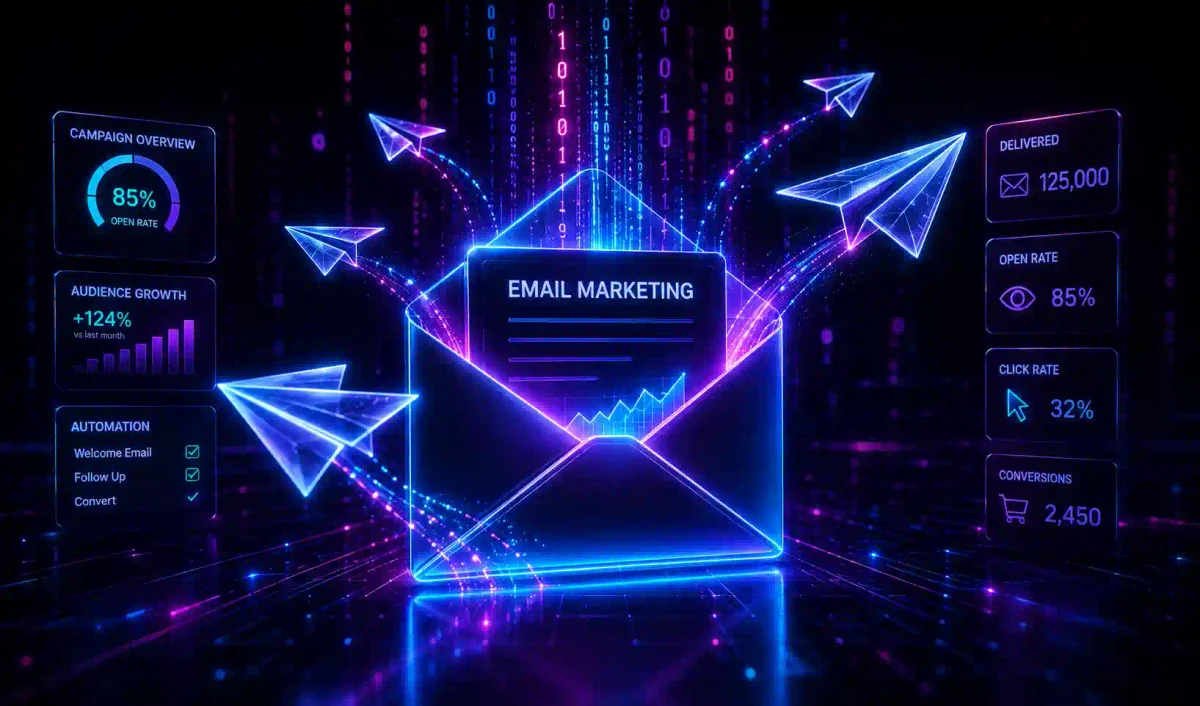
Every few years, a prominent tech journalist publishes a viral article confidently declaring that “Email is Dead.” They usually predict that a new messaging app, a burgeoning social media platform, or a unified corporate chat tool like Slack will finally replace the aging email protocol.
And every year, they are proven wrong.
In 2026, Email Marketing remains a top champion of digital marketing Return on Investment (ROI). Depending on your industry, email marketing generates an average ROI of $36 to $42 for every dollar spent. Few other marketing channels—not SEO, not Facebook Ads, not influencer sponsorships—come close to that level of financial efficiency.
Why is a technology invented in the 1970s still the most profitable marketing channel in the world? Because your email list is a digital asset that you actually own. You do not own your Facebook followers, your YouTube subscribers, or your Google search rankings. A sudden algorithm change by a tech platform can reduce your social media reach overnight, impacting your business. But nobody can take your email list away from you.
In this guide, we will explore the psychology of email marketing, how to build a list from scratch without being labeled a spammer, how to write copy that converts, and how to engineer automated sequences that nurture leads and generate revenue 24 hours a day, 7 days a week.
1. Rented Land vs. Owned Assets (The Core Philosophy)
To understand the power of email, you must internalize the concept of “Rented Land.”
When you spend five years building an audience of 1,000,000 followers on Instagram, TikTok, or YouTube, you are building a house on rented land. You do not own the platform. The platform dictates the rules, and they can change them at any time. If Instagram decides to lower organic reach from 20% to 1% to encourage you to buy advertisements to reach your followers, you have limited recourse. You are at their mercy.
Your email list is an Owned Asset. It is equity. When you possess a cultivated list of 100,000 email addresses, you have a direct, unfiltered line of communication to 100,000 people who have asked to hear from you.
Therefore, the primary goal of other marketing channels—Search Engine Optimization, Social Media Marketing, and PPC Advertising—should often be to drive users to your website so you can capture their email address, moving them from rented land to owned territory.
2. How to Build an Email List (Ethical Lead Generation)
You cannot simply buy an email list. Let us be clear: Buying a list of 50,000 random email addresses from a data broker is illegal under modern GDPR and CAN-SPAM laws, and it will harm your business. The people on that list do not know you, they did not ask for your emails, and they will likely mark you as spam. Soon, Google and Microsoft could blacklist your domain, and you will struggle to send emails again.
You must earn every email address. You must provide value first.
The Power of the Lead Magnet
People guard their inboxes. They are already dealing with corporate spam. They will not give you their email address just because you put a box in your footer that says “Subscribe for Updates.” You must offer an incentive. In digital marketing, this is known as a Lead Magnet.
A Lead Magnet is a valuable, free piece of content that solves a specific problem for the user, delivered in exchange for their email address.
Examples of Effective Lead Magnets:
- B2B Software (SaaS): A free 14-day trial without requiring a credit card, or a detailed Whitepaper analyzing “The State of the Industry in 2026.”
- E-commerce Retail: A discount wheel, or a simple popup stating, “Enter your email to get 15% off your first order today.”
- Service Business / Consultants: A free, actionable downloadable asset. (e.g., “Download my 25-Point SEO Website Audit Excel Checklist”).
Opt-in Forms and Landing Pages
Once you have designed a Lead Magnet, you need an optimized digital mechanism to capture the user’s information.
- Dedicated Landing Pages: A standalone web page stripped of navigation bars and external links. It is focused on pitching the value of the Lead Magnet. The user only has two choices: enter their email, or close the browser tab.
- Exit-Intent Popups: Many marketers dislike popups, but the data shows they work. An “Exit-Intent” popup uses mouse-tracking technology to detect when a user’s cursor moves toward the “Close Tab” button. It displays the Lead Magnet offer just as they are about to leave your site, capturing lost traffic.
3. The Psychology of the Subject Line
If your subject line fails, your email campaign fails. It is that simple. It does not matter how good the body content of your email is; if the subject line doesn’t compel the user to click and open it, the email is ineffective.
The 4 U’s of Masterful Subject Lines
Successful copywriters judge their subject lines against the 4 U’s framework:
- Urgent: Give the user a compelling reason to open the email right now, rather than “later.” (e.g., “Your 20% discount code expires at midnight”).
- Unique: Stand out from the gray sea of boring corporate newsletters. Use emojis, but use them sparingly and strategically (no more than one per subject line).
- Ultra-specific: Vague subject lines get ignored. (e.g., Instead of “Boost Your Open Rates”, use “The template I used to increase open rates by 14.2%”).
- Useful: Implicitly promise a benefit to the reader if they choose to open it.
The “Curiosity Gap” (The Ultimate Weapon)
The Curiosity Gap is a powerful psychological tool in copywriting. It involves giving the user just enough information to make them curious, but withholding the answer so they are compelled to open the email.
- Bad (Boring Fact): “We have released our new orthopedic running shoe.”
- Good (Curiosity Gap): “The bizarre new shoe that fixed my chronic back pain.”
4. Writing High-Converting Email Copy
Once the user clicks the subject line and opens the email, you have approximately three seconds to hook their attention before they hit “Delete.”
Write Like a Human, Not a Faceless Corporation
A common mistake companies make is sending emails that look like HTML-heavy digital brochures. They are packed with stock photos, complex layouts, and corporate jargon. These emails look like advertisements and are often ignored.
The highest-converting marketing emails are often just plain text. They look and read like an email you would receive from a friend or colleague.
Critical Rules for Email Copywriting:
- One Goal Per Email: Do not confuse the user. Do not ask them to read your blog post, follow your Instagram, subscribe to your podcast, and buy your product in the same email. Pick one action you want them to take, and make your sentences lead to that primary Call-To-Action (CTA).
- Use Micro-Paragraphs: The majority of emails are read on mobile phones. A paragraph that looks normal on a desktop monitor will look like an intimidating wall of text on a phone screen. Keep your paragraphs to 1 or 2 sentences max. Use bullet points.
- Deep Personalization: Do not just say “Dear Valued Customer.” Use merge tags to dynamically pull the user’s first name from your database (e.g., “Hey John,“).
5. The 4 Essential Automated Email Sequences
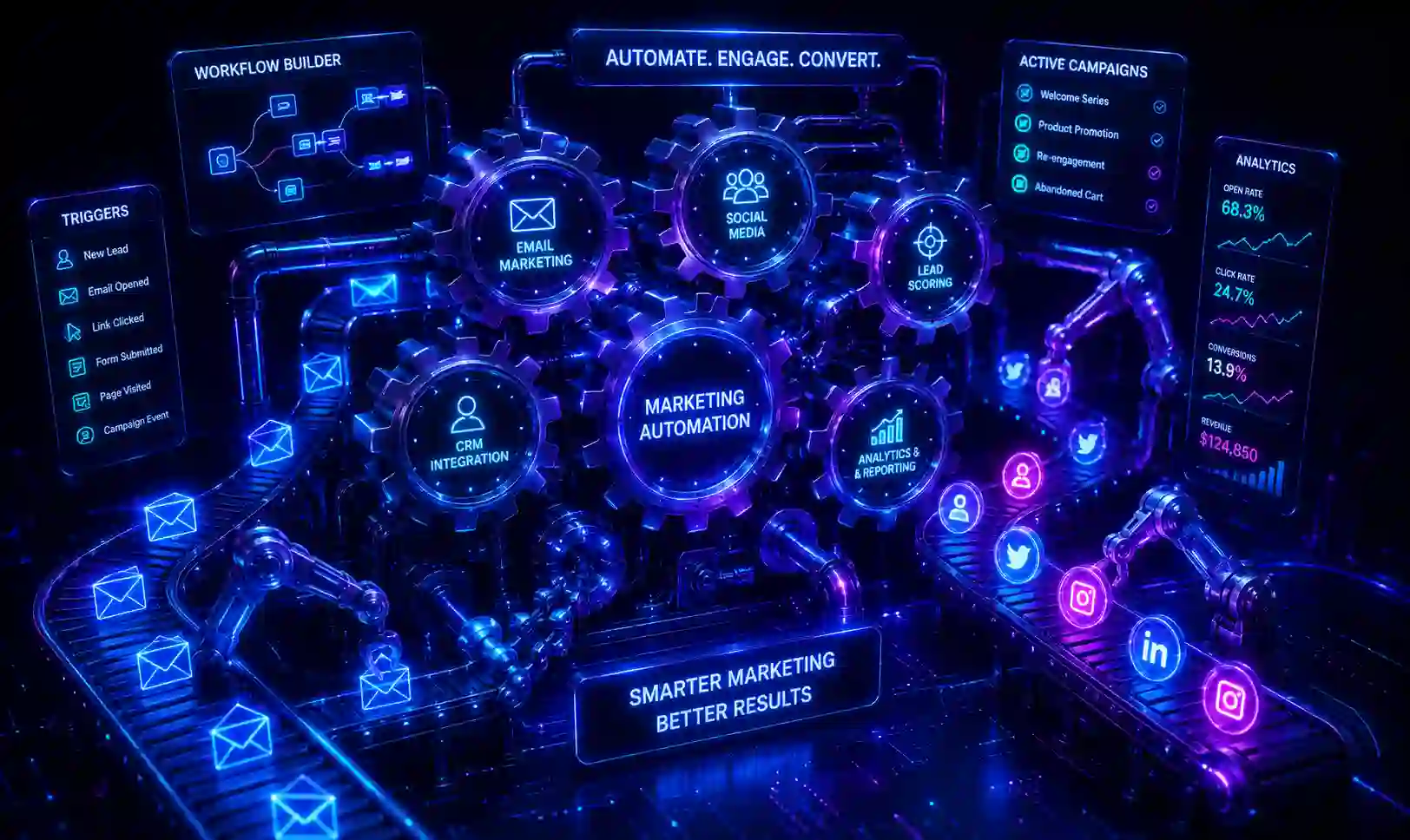
Sending a weekly newsletter is great, but the financial power of email marketing lies in Automation. You write the email sequence once, configure the logic in your software, and the system sends it to people automatically based on their behavior, generating revenue in the background.
Every digital business should have these 4 foundational sequences set up:
1. The Welcome Sequence (The “Soap Opera” Sequence)
This sequence is triggered the moment someone joins your email list. This is when they are most interested in your brand. Do not just send them a PDF and disappear. Over the next 5 to 7 days, send them a crafted, automated sequence of emails. Introduce your brand’s core mission, tell a story about how you founded the company, give away your best educational content for free, and eventually, build up to a soft pitch for your core product.
2. The Abandoned Cart Sequence (The Revenue Saver)
For e-commerce, this sequence is important. If you don’t have it, you are leaving money on the table. If a user adds a $100 item to their shopping cart but gets distracted and closes the browser, your software should automatically kick in.
- Email 1 (4 hours later): “Oops! Did you forget something? We saved your cart for you.”
- Email 2 (24 hours later): “We know you’re busy. Here is an exclusive 10% off code to finish your order today.” This simple two-email automated sequence often recovers 15% to 20% of all lost sales.
3. The Post-Purchase Nurture (The Upsell)
The marketing does not stop the moment they hand you their credit card. That is just the beginning of the relationship. Send an automated email thanking them. Send them a video tutorial on how to use the product they bought. Then, 30 days later, automatically send an email asking for a review, or pitching a complementary product (e.g., If they bought a camera, automate an email 30 days later pitching them a camera lens).
4. The Sunset / Re-engagement Campaign
If a subscriber has not opened an email from you in 6 months, they are inactive. They drag down your deliverability metrics. Send them one final, automated email: “We miss you! Do you still want to hear from us? Click here to stay on the list.” If they do not click, the software deletes them from your database. Keep your list clean.
6. List Segmentation and Deep Personalization
Sending the same generic email to everyone on your list (a strategy known as “Batch and Blast”) is an outdated strategy that reduces engagement.
You must Segment your list into targeted groups. If you run an online pet store, you should not send an email promoting a sale on Cat Food to a customer who has only purchased Dog Toys. It shows you don’t know them, and they may unsubscribe.
How to Segment Your Database:
- Demographics: Age, geographic location, gender, or company size.
- Behavioral Data: Have they purchased before? Have they purchased more than 5 times (VIP Status)? Did they abandon their cart?
- Interest Tagging: If you send a newsletter with three links (one about SEO, one about PPC, one about Social Media), and the user clicks the SEO link, your software should automatically apply an “Interested in SEO” tag to their profile. You can now send them targeted SEO product pitches.
By sending relevant emails to smaller, specific segments, your open rates will improve, your conversion rates will increase, and your unsubscribe rates will decrease.
7. Email Deliverability: Surviving the Spam Folder
You can write a great, persuasive email, but if Google’s algorithms route it into the user’s Spam folder, nobody will read it. Your campaign revenue will suffer.
Deliverability is the technical backbone of email marketing.
How to Ensure High Deliverability (Inbox Placement):
- Consistent List Cleaning: As mentioned in the Sunset campaign, you must regularly delete inactive subscribers. Internet Service Providers (ISPs) like Google and Yahoo monitor your open rates. If they see that you send 100,000 emails and only 1,000 people open them, Google’s algorithm assumes you are a spammer, and will begin routing your future emails to the spam folder, even for the people who want to read them.
- Domain Authentication (SPF, DKIM, DMARC): This is technical but necessary. You must configure SPF, DKIM, and DMARC records in your website’s DNS settings. This cryptographic signature proves to Google’s servers that the email is originating from your legitimate domain, and not from a hacker spoofing your brand.
- Avoid Algorithmic Spam Triggers: Words like “FREE!!!”, “Make Money Fast”, “Double your income”, or using excessive exclamation points and ALL CAPS can trigger automated spam filters.
- The Mandatory Unsubscribe Link: The CAN-SPAM Act legally requires a clear unsubscribe mechanism. Furthermore, if users cannot easily find the unsubscribe link at the bottom of your email, they will take the easy route and hit the “Mark as Spam” button at the top of their inbox instead. High spam complaints will damage your sender reputation.
8. Crucial Email Marketing Metrics
Do not operate your business on gut feeling alone. You must watch the data closely.
| Metric | What it Measures | What is considered “Good”? |
|---|---|---|
| Open Rate | The percentage of people who received the email and opened it. | 20% to 35%+ (This varies depending on your industry and list size). |
| Click-Through Rate (CTR) | The percentage of people who opened the email AND clicked a link inside. | 2% to 5%+ |
| Unsubscribe Rate | The percentage of people who explicitly left your list after receiving an email. | Should remain strictly below 0.5%. |
| Bounce Rate | The percentage of emails that could not be delivered (because the email address is fake or inactive). | Should remain below 2%. High bounce rates trigger spam filters. |
Note for 2026: In late 2021, Apple introduced Mail Privacy Protection (MPP), which automatically pre-loads tracking pixels for all Apple Mail users. This inflates Open Rates, making them less accurate. Because of this, modern email marketers focus more on actual Clicks, Replies, and Revenue Generated, rather than Open Rates.
9. Choosing the Right ESP (Email Service Provider)
You cannot send 10,000 marketing emails from your personal Gmail or Outlook account. You risk being banned. You must utilize professional SaaS software known as an Email Service Provider (ESP).
Choosing the right tool is critical for your scale:
- For Creators, Writers, and Bloggers: ConvertKit or Substack. These platforms offer simplicity, plain-text rendering, and are built for newsletters and digital product creators.
- For E-commerce (Shopify/WooCommerce): Klaviyo. Klaviyo is a popular choice for e-commerce email. It features deep, native integrations with shopping carts, allowing for abandoned cart flows and revenue tracking.
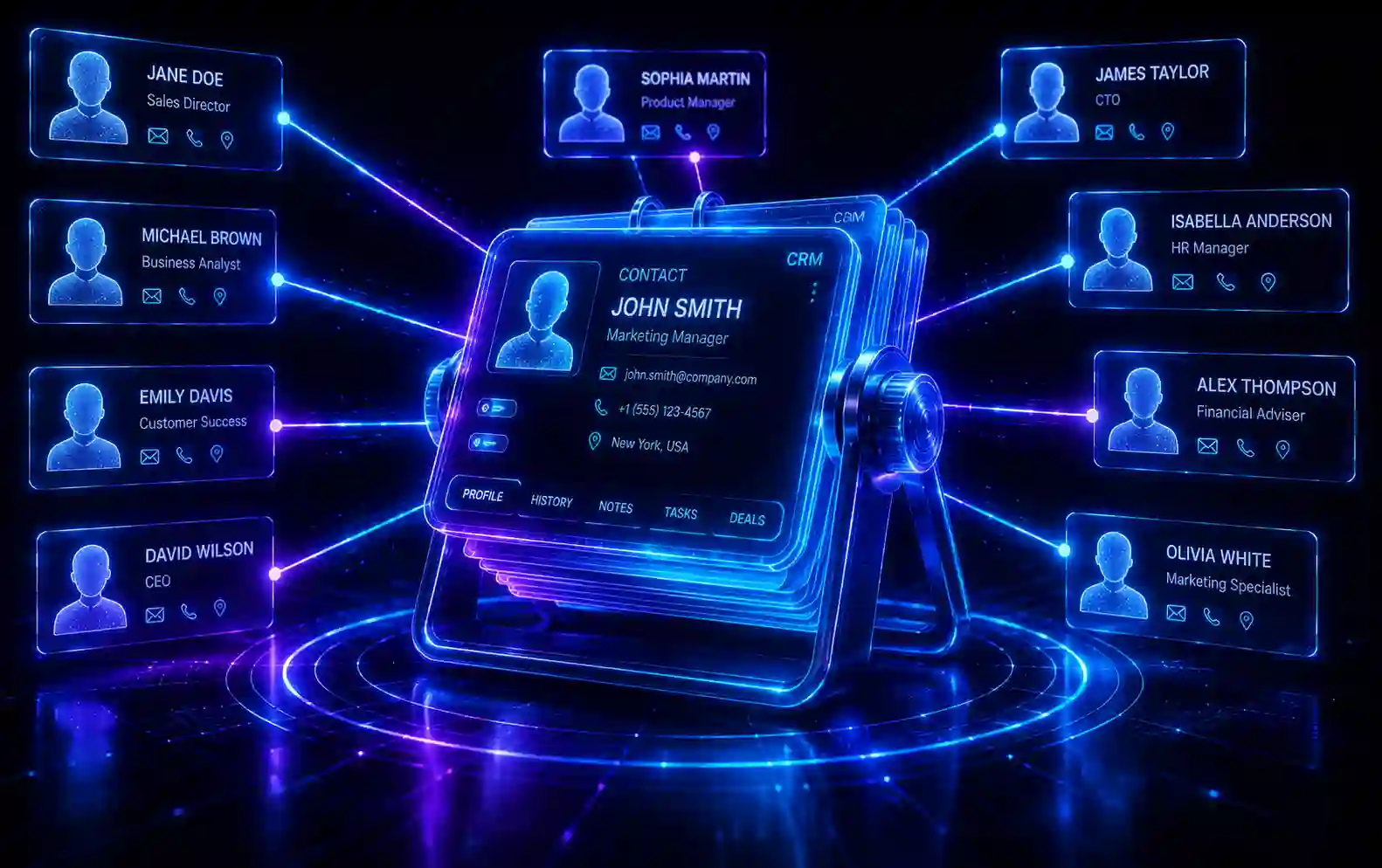
- For Enterprise B2B / Complex Sales: HubSpot or ActiveCampaign. These are robust platforms with a focus on native CRM integration, behavioral tagging, and lead scoring for sales teams.
Frequently Asked Questions (FAQ)
1. Why is email marketing still important in 2026? Because an email list is an owned asset. Unlike social media platforms where algorithm changes can destroy your reach overnight, you have full control over communicating with your email subscribers directly, making it one of the most profitable digital marketing channels.
2. What is a Lead Magnet in email marketing? A Lead Magnet is a valuable, free piece of content (such as a whitepaper, discount code, or checklist) offered to a user in exchange for their email address. It gives them a strong incentive to subscribe to your list.
3. How should I write a high-converting email subject line? Successful subject lines typically follow the “4 U’s” framework: Urgent, Unique, Ultra-specific, and Useful. Additionally, using a “Curiosity Gap” by withholding just enough information makes readers eager to click and open the email.
4. What is an Abandoned Cart email sequence? An Abandoned Cart sequence is an automated series of emails triggered when an e-commerce shopper adds an item to their cart but leaves the website without purchasing. These emails remind the user and often provide a small discount to recover the lost sale.
5. How can I keep my emails out of the spam folder? To ensure high deliverability, regularly clean your list by removing inactive subscribers, set up proper domain authentication records (SPF, DKIM, and DMARC), avoid algorithmic spam trigger words, and always include a clear unsubscribe link.
Conclusion
Email marketing is the digital equivalent of a high-yield savings account that pays compounding dividends. Building a high-quality, engaged list requires patience, discipline, and respect for your audience. You must give away valuable content for free, protect your subscribers’ inboxes from spam, and write compelling, human-centric copy.
But the reward for that discipline is independence. Independence from the volatility of social media algorithms, relief from advertising costs, and the ability to generate predictable, scalable revenue. When you own your audience, you own your business.
Discussion
Loading comments...